






Pre-Exit Companies
~100-name universe ·
40–50 target holdings
$1B+ valuations. Pre-Exit. Diversified, index-like exposure to companies that haven’t yet IPO’d.




































Illustrative target universe - not current holdings. Logos are the property of their respective owners and are shown for context only; no affiliation or endorsement is implied.
Pre-IPO (Initial Public Offering) tech, accessed directly · not SPVs (Special Purpose Vehicles), not secondary buys
~100-name universe ·
40–50 target holdings
$1B+ valuations. Pre-Exit. Diversified, index-like exposure to companies that haven’t yet IPO’d.
Our structure is a “win-win” transaction.
We finance employees’ option exercise costs and tax liability, at discounts for our investors, so both can create generational wealth.
~50–70% discount to Latest Financing Valuations · ~30–40% to 409A
Reflects discounts Fuel Venture Capital’s affiliated funds captured on past trades; the Fund seeks similar. Past transactions, not a guarantee of future pricing.
Illustrative target companies and target pre-exit company count only - not current holdings, not commitments, and not guarantees of future performance; targets may not be achieved. The discount ranges reflect discounts Fuel Venture Capital’s affiliated funds captured on past trades; the Fund seeks to capture similar - past transactions, not a guarantee of future pricing. See the Cap-U Fuel Innovation 100 confidential offering memorandum and related subscription documents for complete terms and risks.
Any transfer of shares to an SPV are void under our transfer restrictions.
Tokenized Anthropic + OpenAI exposure - collapsed in 7 days1
We finance the employee’s stock options - which provides us access to the direct shares of the company.
Cap-U Fuel investor exposure, by design - no SPVs, no tokens, no unauthorized transfers
1 Tokenized share price declines reflect publicly reported moves on PreStocks-style Solana platforms over the seven-day window following each company’s notice (sources: Bloomberg, TechCrunch, CoinDesk, Axios, May 12–18, 2026). Cap-U Fuel Innovation 100 is not affiliated with, endorsed by, or sponsored by Anthropic, OpenAI, or any other company referenced. Names are used as factual references to publicly reported corporate actions and not as solicitations to invest in any specific portfolio company. The structural comparison above describes the fund’s contractual design as disclosed in the Confidential Offering Memorandum; investors should review those documents in full before drawing conclusions about the fund’s exposure to any specific risk. Past company actions are not indicative of future regulatory or contractual outcomes.
How the Cap-U Fuel Innovation 100 compares to the typical pre-IPO investment vehicle.
Pre-IPO shares purchased from existing holders on secondary-market platforms.
Financing employee options at the exercise price - accessing shares at attractive discounts.
Side-by-side with traditional late-stage venture and secondary market SPVs.
Sources & methodology. Late-stage venture norms reflect publicly observable industry data (PitchBook Venture Monitor, NVCA, Cambridge Associates fund metrics; data as of 2024–2025). Secondary-market characteristics reflect published platform terms and aggregated transaction commentary from Forge, EquityZen, Hiive, and Nasdaq Private Markets. Cap-U Fuel Innovation 100’s discount reflects discounts Fuel Venture Capital’s affiliated funds captured on past trades; the Fund seeks to capture similar — past transactions, not a guarantee (full terms per the Confidential Offering Memorandum). Platform names are referenced for context only and imply no affiliation with, or endorsement by, Cap-U or those firms.
Comparison is illustrative. Actual pricing on secondary platforms varies materially by company, vintage, and demand - some shares trade at discounts to the most recent financing round, others at premiums (per secondary-market transaction data from providers such as Forge and Caplight, 2024–2025). The ~50–70% discount range reflects discounts Fuel Venture Capital’s affiliated funds captured on past employee-option-financing trades; it reflects past transactions and is not a guarantee of future pricing. The Fund seeks to capture similar discounts; actual pricing terms and methodology are described in the Confidential Offering Memorandum. Late-stage venture fees (2% management, 20% carry) and 10-year fund-life cycles reflect standard institutional venture fund economics (the widely reported “2-and-20” fee structure and ~10-year fund terms, consistent with National Venture Capital Association fund-formation guidance), not the terms of any specific manager. Fund-level fees of 2% management and 20% carry apply to all Cap-U Fuel Innovation 100 investors. Comparisons describe common characteristics of these access routes in general and are not statements about any specific named provider; features, availability, and pricing differ by provider and over time.
Cap-U has partnered with the institutional private-markets platform of Fuel Venture Capital - founded 2017 by Jeff Ransdell, formerly one of six leaders of Merrill Lynch’s wealth division.

~$550M+
AUM
Assets under management, all Fuel funds
45
Companies
Active investments
5 + 1 co-invest
Funds
4
Continents
Founders across four hubs
Fuel Venture Capital figures as of December 31, 2025.
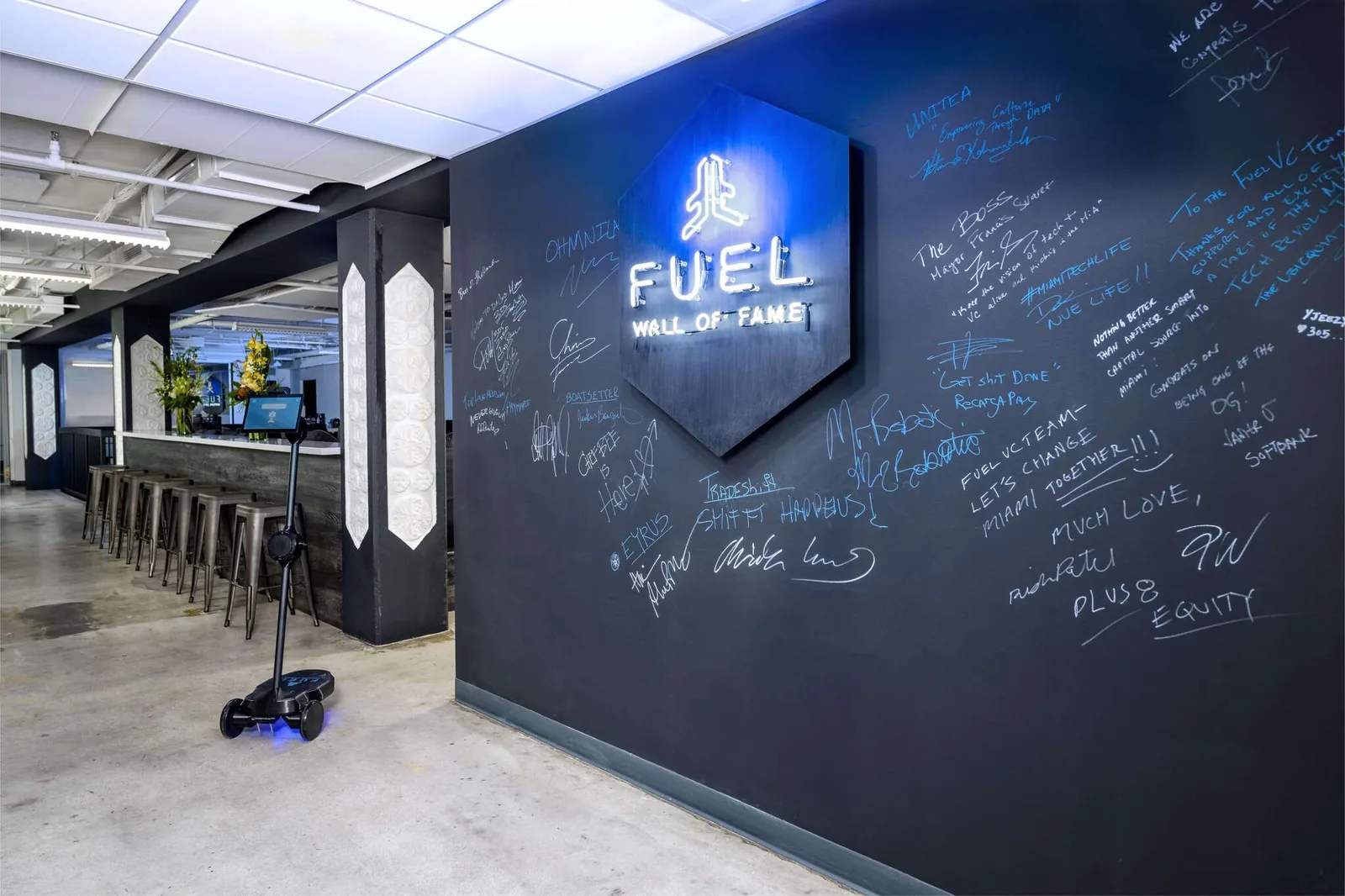
Selected Fuel VC Portfolio
 Replit
betr
Replit
betr
 RecargaPay


Fuel Venture Capital AUM, fund count, and portfolio company figures reflect aggregated firm-level data as of December 31, 2025 and include funds and co-investment vehicles managed by Fuel Venture Capital. Portfolio logos are illustrative of business relationships and do not constitute endorsements of the Cap-U Fuel Innovation 100. Past performance of Fuel Venture Capital and its affiliated funds is not indicative of future results.
of employee stock options at top private companies go unexercised - not from lack of belief, but lack of capital.
Exercising late-stage options at a single unicorn routinely runs into six figures once strike and Alternative Minimum Taxes (“AMT”) are combined. Most employees can’t write that check from savings.
Each 409A step-up near an IPO or M&A (Merger or Acquisition) widens the AMT spread. Waiting can cost employees even more money - the clock works against the employee.
Departing employees typically have 90 days to exercise or forfeit. A large percentage walks away from vested equity rather than fund it themselves - this time pressure creates the supply we finance.
Source: Carta & Forge Global · employee equity studies, 2023–2024
of trapped pre-exit equity - which the Fund seeks to access at a discount to latest financing valuations, on terms like those Fuel Venture Capital’s affiliated funds captured on past trades.
Cap-U Fuel funds the strike price and the tax liability the employee can’t cover - helping employees create generational wealth.
Principal plus accrued interest at exit, layered with a contractual equity-kicker share when the company IPOs or sells - our investors’ upside is negotiated upfront.
Discount ranges: 30–40% discount to latest 409A valuations, and ~50–70% discount to latest financing valuations — captured on Fuel Venture Capital’s affiliated funds’ past trades; the Fund seeks similar.
Source: Cap-U internal estimate · based on Forge & Carta unexercised-equity data (2023–2024)
Market sizing and unexercised-equity percentages shown in this section are illustrative estimates based on Carta, Forge Global, and Cap-U internal analysis - not actual fund pricing terms or guaranteed outcomes. Discounts do not guarantee returns and may narrow or disappear depending on market conditions and exit timing. A discount at entry does not protect against principal loss if a company’s valuation declines prior to exit. These discounts are not comparable to public-market valuations and should not be interpreted as undervaluation relative to public-company multiples. Past market behavior is not indicative of Cap-U Fuel Innovation 100 results. See the Cap-U Fuel Innovation 100 confidential offering memorandum and related subscription documents for complete risks, terms, and disclosures.
The S&P 500 no longer owns America’s great companies.
The Macro Backdrop
Median age at IPO has more than tripled since 1999 - meaning the highest-growth years of a company’s life are now compounding entirely inside the private cap table (a company’s capitalization table).
Source: Jay Ritter, Univ. of Florida (data through 2025); Forge Global · Trend illustrative
01
Median Annual Appreciation · $1B → IPO
The years between unicorn status and IPO now produce the bulk of long-term returns - compounding inside the cap table before any public market ever sees it.
Source: Forge Global · Unicorn IPOs 2019–2025
02
Cumulative Value · 211 Ultra-Unicorns ($5B+)
53% of all new 2025 unicorns are AI-native. OpenAI, Anthropic, SpaceX, Databricks, and Stripe alone represent over $700B of pre-IPO equity - much of it employee-held.
Source: Crunchbase · June 2025
03
S&P 500 Index Weight · Top 7 Stocks
Seven stocks now make up nearly a third of the entire S&P 500 - the most concentrated the U.S. index has been in five decades. Cap-U Fuel’s 40–50-name portfolio is what diversification used to look like, before the public market compressed.
Source: S&P Dow Jones Indices · 2024
Market data shown is historical and illustrative of industry context - not a projection, target, or guarantee of Cap-U Fuel Innovation 100 performance. Past performance is not indicative of future results.
Capital & tax needs solved
12 mos. · ~50–70% historical discount to latest financing valuations
Portfolio value accelerates
Strategically re-deployed
Aligned Interests
Illustrative diagram only. The Cap-U Fuel Innovation 100 invests exclusively in employee option exercise financings. There is NO intermediate scenario in which investors recover capital without a liquidity event. Reserved capital deployment, MOIC (Multiple on Invested Capital), and returns are not guaranteed and depend on portfolio company outcomes, exit timing, and market conditions. Investors may lose some or all of their investment. Allocation percentages (60% / 40%) are target ranges and may vary. The ~50–70% discount shown reflects discounts Fuel Venture Capital’s affiliated funds captured on past employee-option-financing trades; the Fund seeks to capture similar — past transactions, not a guarantee of future pricing.
The fund is offered exclusively to accredited investors verified under SEC Rule 506(c) of Regulation D. Accreditation generally requires either $200,000+ annual income ($300,000 joint), $1M+ net worth excluding primary residence, certain professional credentials (Series 7, 65, or 82), or entity status with $5M+ in assets. Self-certification is not sufficient - third-party verification is required.
Cap-U Fuel Innovation 100 acquires economic exposure primarily through employee option financing. The fund advances the cash for the strike price and tax liability, letting late-stage private-company employees exercise their vested stock options; in exchange, the fund receives a contractual right to a defined share of the eventual liquidity proceeds. The effective cost basis is the employee strike price, not the latest 409A or latest financing valuation - so the entry price sits at a discount to those benchmarks.
No shares change hands until the underlying company itself authorizes a liquidity event (IPO, tender, or M&A). Because the fund holds contractual rights to employee proceeds rather than direct share interests, there is nothing for the issuer to refuse to recognize at the corporate-action stage. This is structurally different from SPVs, which depend on the issuer recognizing the SPV as a valid holder.
In May 2026, both Anthropic and OpenAI publicly voided unauthorized SPV transfers of their shares.
The fund targets a 3–5 year liquidity window per underlying position, aligned with the typical pre-IPO timeline for late-stage US tech companies. Specific terms - including any redemption or extension provisions - are detailed in the offering memorandum and limited partnership agreement. Private securities are illiquid, and investors should plan for the full term.
Capital United, LLC is the registered investment adviser (CRD #285616) to the fund. Fuel Venture Capital, founded in 2017 by Jeff Ransdell (formerly Merrill Lynch), serves as the strategic partner providing deal sourcing, founder relationships, and portfolio-company access across its 45-company, ~$550M+ AUM portfolio. The two firms have separate legal structures and distinct roles.
Private securities are illiquid, have no public market, no guaranteed resale, and no scheduled redemption. Investors may lose some or all of their invested capital. Forward-looking statements about market opportunity, returns, and timing are subject to risks and uncertainties; actual results may differ materially. Past performance and prior firm experience are not indicative of future fund results.
Andy Childs will follow up personally within one business day to verify your accredited status and walk you through the offering documents.